
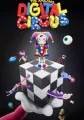



Most animated projects that hit the kind of numbers The Amazing Digital Circus put up would already be three seasons deep into a streaming deal, a spinoff, and a mobile game tie-in by now. This one had every commercial reason to do exactly that, and instead its creator closed the book on purpose after nine episodes, ending a story that started as a free YouTube pilot and finished with a theatrical release expanding to over two thousand American screens.
That restraint is worth understanding on its own terms, separate from the show's dark comedy and its trauma-soaked premise, because it's genuinely rare for something this commercially explosive to stop precisely where its own story says it should. It's also worth clarifying upfront what "The Amazing Digital Circus" actually refers to at this point, since the name now covers several overlapping things: the original nine-episode YouTube series, the theatrical release of its final two chapters under the banner The Last Act, and a growing catalog of merchandise and side content from Glitch Productions built around the same cast. This piece is specifically about the finished series itself and the choice to end it there, not the surrounding commercial ecosystem that's grown up around it since.
From a YouTube Pilot to a $36.6 Million Theatrical Weekend
The show's creator, an animator working under the name Gooseworx, built The Amazing Digital Circus through the Melbourne-based studio Glitch Productions, founded by brothers Luke and Kevin Lerdwichagul, with Kevin Temmer leading the animation. The premise sounds simple on paper — six humans trapped inside a colorful, circus-themed virtual reality run by an unstable AI ringmaster named Caine, forced through daily "adventures" meant to distract them from the psychological horror of their situation — but the execution turned out to be the kind of thing that spreads on its own.
The pilot went up on YouTube on October 13, 2023, and by June 2026 it had racked up roughly 441 million views, putting it among the most-watched animated pilots ever released on the platform; a 2024 survey found 22% of American teenagers already aware of the show within its first year. Episode two pulled over 30 million views on its first day alone and crossed 121 million within months, and when Netflix began carrying the series day-and-date with YouTube starting in October 2024, it climbed to the No. 4 spot on Netflix's own Top Ten chart within a single week of availability. By December 2024, cumulative viewership across all Digital Circus content on YouTube had passed 25 billion views, and by March 2026 industry tracking pegged audience demand for the show at roughly 76 times the average for an online series.
What makes that trajectory even stranger is the show's release pace, which never behaved like a normal season. Episodes landed irregularly across more than two and a half years — May 2024, October 2024, December 2024, then a gap into June and August 2025, a December 2025 entry, and finally two closing chapters in March and June 2026 — a cadence closer to a slow-burn independent film series than a typical streaming show's binge-ready season drop.
That patience paid off in a way few YouTube-native projects ever get to experience: the final two episodes, marketed together as The Amazing Digital Circus: The Last Act, received an actual theatrical release on June 4, 2026, pulling in $36.6 million globally on opening weekend alone. Demand pushed the release from an initial 900 U.S. theaters up to 2,221, and its international run, originally planned as a four-day event, stretched to two full weeks. For a series that started as a single free video from an independent animator, watching it fill thousands of movie screens three years later is the kind of arc that's genuinely rare even among the biggest YouTube-to-mainstream success stories.
Very few independently produced animated projects make that jump at all, let alone while staying under the control of the same small studio that started it, without a major network or streaming giant absorbing the property and reshaping it along the way. Glitch Productions kept ownership and creative direction in-house through the entire run, which is arguably as unusual a story as the viewership numbers themselves in an industry where breakout web series are usually acquired, rebooted, or diluted well before they reach anything like a theatrical release.
Why Ending It Here Is the Right Call
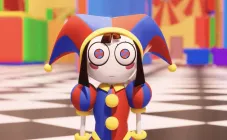
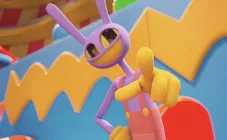
Underneath the numbers, the show earned its audience through a specific combination of tone that shouldn't work as well as it does: bright, deliberately retro 1990s-style 3D visuals, rendered in Unreal Engine, wrapped around genuinely dark material about trauma, identity, and the slow psychological toll of being trapped somewhere you can't leave. Pomni, a former accountant thrown into the circus as its newest arrival, anchors the ensemble alongside characters like Jax, a cynical trickster; Ragatha, an optimistic former real estate agent; Gangle, a timid artist hiding behind interchangeable masks; Kinger, the circus's longest-trapped resident slowly unraveling; and Zooble, a modular character who refuses to fully participate in Caine's games at all.
That cast, and the writing built around them, earned the show real critical recognition beyond viral numbers alone — an Annie Award nomination in 2024 and multiple Webby Award wins across 2024 and 2025, with consistent praise specifically for how far the animation, voice performances, and thematic ambition outpaced what a self-funded, independently produced web series usually attempts.
Against that backdrop, Gooseworx's decision to end the story at nine episodes, confirmed before the finale titled "Remember" even aired on June 19, 2026, stands out as a genuinely unusual creative choice in the current media landscape. Nearly everything about the show's numbers — the billions of cumulative views, the Netflix chart placement, a theatrical opening weekend most mid-budget studio films would envy — pointed toward an obvious commercial case for stretching the story into a second season, additional spinoffs, or an open-ended streaming commitment.
Instead, the creator treated the nine-episode arc as a complete story with a beginning, middle, and definitive end, closing off the characters' journey rather than leaving it open for franchise expansion simply because the audience and the money were both clearly there for more. That's a meaningfully different instinct than most viral IP gets to operate under, where commercial momentum alone usually dictates continuation regardless of whether the underlying story actually has more to say. Ending on the show's own terms, at the moment its themes of trauma and eventual resolution could actually land with real closure, is exactly the kind of restraint independent creators rarely get to exercise once a project becomes this large.
And it's the reason The Amazing Digital Circus is likely to be remembered as a complete, self-contained work rather than another franchise that outlasted its own story. There's also something fitting in the timing of that decision given the show's own subject matter — a story fundamentally about people trapped somewhere they can't leave, forced through repeating cycles designed to keep them distracted rather than let them actually resolve anything, choosing to end with an ending rather than looping indefinitely, is a piece of thematic consistency a lot of long-running franchises never bother to extend to their own business decisions.






Leave a comment
Your comment is awaiting moderation. We save your draft here
0 Comments