




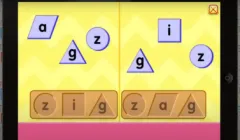
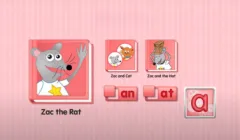
Day One. Downloaded the Starfall app tonight after my daughter's kindergarten teacher mentioned it at pickup, offhand, the way teachers mention twenty things a week that you mean to look into and mostly don't. This one I actually looked into, mostly because the name rang a bell from my own childhood computer lab in the early 2000s — turns out that's not a coincidence. The site launched August 27, 2002, which means it's now well into its third decade online, which is a genuinely strange thing to sit with when most of what I remember from that era of the internet is long gone. My daughter is five, mid-kindergarten, decoding short vowel sounds but still guessing at anything longer than four letters. Tonight was just installing it and letting her poke around the ABCs section for ten minutes before bed. She liked the buzzing bee that flies across the screen when you tap a letter. That's the whole review so far: a bee, some buzzing, bedtime. I didn't push past the ten minutes even though she wanted more, mostly on principle — I've learned the hard way with other apps that letting a five-year-old dictate screen time by enthusiasm alone tends to backfire by day four.
Day Three. Read the "About" page tonight after she went to sleep, mostly out of curiosity about who actually builds something like this. The founder, Stephen Schutz, has a genuinely striking backstory for someone running a reading platform: he didn't learn to read himself until fifth grade, despite being strong at math the whole time, and went on to get a PhD in physics from Princeton before eventually building Blue Mountain Arts, the greeting card company, with his wife Susan Polis Schutz. Starfall came later, built specifically to give kids the kind of accessible, patient reading tool he didn't have as a struggling young reader himself.
What actually surprised me was the third name attached to the founding: their son, Jared Polis, co-founded the site in 2002 alongside his parents — the same Jared Polis who's now the governor of Colorado. It's a strange thing to learn about an app my kid uses to practice short vowels, but it explains something about the tone of the whole platform. It doesn't feel like it was built by a marketing team chasing an education trend; it feels like it was built by people with a specific, personal reason to care whether it worked. It also reframed how I watched her use it the next few nights — instead of just checking whether she was engaged, I found myself paying closer attention to whether the actual instruction made sense, the way you'd trust a recipe more once you learned the person behind it had actually cooked it wrong a hundred times first.
Week One, Day Six. We've settled into a pattern: fifteen minutes after dinner, most nights, working through the ABCs section letter by letter. Each letter comes with a short animated sequence and a simple interactive game, and my daughter has strong opinions about which letters are "the good ones" versus which are boring, a distinction I cannot fully explain but that she defends passionately.
The content itself is phonics-based, built around research from reading specialists at the National Institutes of Health and the University of Oregon, which tracks with how methodical the progression feels — nothing gets skipped, and nothing moves faster than the last thing actually stuck. There are four broad levels total, moving from basic letter recognition through early reading, intermediate reading, and more advanced beginning-reader material, and we are firmly, unglamorously parked in level one. I checked the pacing against what her kindergarten teacher sent home in a curriculum letter back in September, and the two line up closely enough that the app genuinely feels like reinforcement rather than a competing, contradictory method she has to mentally juggle between school and home.
Week Two, Day Nine. Noticed tonight that the visual style hasn't really changed since whatever era I'm half-remembering from my own childhood — simple, flat, slightly retro character art rather than anything trying to look like a modern mobile game. I mentioned this to a teacher friend over text and she said that's basically the point: Starfall has deliberately not chased flashy redesigns the way most kids' apps do, and some reviewers specifically flag the interface as "dated" compared to newer competitors. My daughter, five years old and constitutionally incapable of caring about design trends, has never once mentioned it. She cares whether the bee makes a sound when she taps it. It does. That's the whole bar, apparently, and Starfall clears it every night without fail.
Week Two, Day Eleven. Discovered by accident tonight that there's math content buried past the reading sections too — Starfall isn't just a phonics tool, it expanded over the years to cover a full kindergarten curriculum and pre-K material, plus math activities that reportedly stretch all the way up through fifth grade. We didn't touch any of that tonight; five is still deep in letter-sound territory and I didn't want to derail a routine that's actually working. But it's reassuring to know there's real runway here if reading clicks faster than expected and she wants somewhere else to go inside the same app rather than us hunting for a whole new platform in six months.
Week Three, Day Fifteen. A real milestone tonight: she sounded out "cat" on her own, letter by letter, out loud, without me prompting a single sound. I actually got a little emotional about it, which felt faintly ridiculous over a three-letter word, but there's something about watching a kid connect the dots on decoding for the first time that lands harder than I expected. I don't think Starfall alone did that — she's also getting phonics instruction at school five days a week — but the app gave her a low-pressure way to practice the exact same skills at home without it feeling like homework. No grades, no red pen, just a bee and some buzzing and a small animated fox that claps when you get a sound right.
Week Three, Day Eighteen. Ran into the one real friction point tonight: a chunk of the more advanced content sits behind a paid membership, reportedly around $35 a year, and a few of the supplementary printables live in a separate online store entirely. None of that has actually blocked us yet — the free tier has been more than enough for where she's at — but I can already tell we'll hit that wall eventually if she keeps progressing at this pace, and it's worth knowing the free version isn't the entire platform forever. Thirty-five dollars a year is genuinely modest against what some competing reading apps charge monthly, so I'm not treating it as a red flag so much as a line item to budget for eventually, once the free content actually runs out rather than before.
Week Four, Day Twenty-Two. Told my sister about the app tonight and she mentioned Starfall got a nod from TIME magazine years ago, listed among its "50 Websites That Make the Web Great" back in 2011, which tracks with how long this thing has apparently just been quietly working in the background of American classrooms without needing to reinvent itself every year to stay relevant. It also operates as a nonprofit now — the Polis-Schutz family formally donated their full interest in the site to the Starfall Education Foundation back in 2015, converting what had been a family-run social enterprise into an actual public nonprofit. There are no ads anywhere in the app, which after a month of nightly use I can say plainly: I never once had to grab the phone out of her hands to skip past something inappropriate or aggressively monetized. That alone puts it ahead of most things marketed at five-year-olds.
Day Twenty-Eight, the end of the month. Closing out four weeks with a kid who's noticeably more confident sounding out short words than she was at Day One, and with a routine that survived an entire month of bedtime negotiations without becoming a fight. That's not nothing. The app isn't flashy, it isn't chasing whatever trend the newest kids' education startup is chasing, and it clearly wasn't built by people optimizing for engagement metrics over actual literacy. It was built by a man who remembered exactly what it felt like to be a kid who couldn't read yet, more than sixty years after the fact, and it still shows in every single letter animation.
Summary
Starfall, the free phonics-based reading platform founded in 2002 by Stephen Schutz — himself a late reader as a child — alongside his wife Susan Polis Schutz and their son, now-Colorado-governor Jared Polis, has spent over two decades teaching young kids to read through a deliberately simple, ad-free, research-grounded interface. A month of nightly fifteen-minute sessions with a five-year-old turned up real, measurable progress in letter-sound decoding, a dated but functional design that never once got in the way, and a free tier generous enough to cover an entire kindergarten reading journey before a $35 annual membership ever becomes necessary.
Pros
-
 Structured learning journey well-adapted for different learning levels
 - Attractive graphical design tailored for children
- Wide variety of activities enhancing replayability
Cons
-
 Lack of a fictional narrative may not appeal to all children
 - May not offer the level of interactivity or variety found in non-educational apps
- Some content is only accessible with a paid membership
- Sound-based activities might pose challenges for children with auditory processing issues.






Leave a comment
Your comment is awaiting moderation. We save your draft here
0 Comments