








Сhoicer Voicer is the kind of game that looks deceptively simple at first glance, then quietly starts living in your head after you shut it down. I went in expecting a lightweight voice-driven novelty, something I could sample for a few minutes and move on from. Instead, I found a clever, sharply designed experience that leans hard into personality, timing, and the small thrill of making the right call under pressure. For players who like games that test recognition, reflex, and instinct without burying everything under menus, this one deserves attention.
At its core, Сhoicer Voicer is built around voice interaction and rapid decision-making. The appeal comes from how naturally it uses sound as both a tool and a challenge. Rather than relying on endless text prompts or repetitive button presses, it asks you to listen closely, react fast, and trust your judgment. That alone gives the game a distinct identity. A lot of indie-style releases try to be quirky; this one actually earns that label because the mechanics and presentation work together instead of fighting each other.
First impressions and overall feel
The first thing I noticed was how confident the game is in its pacing. There isn’t much wasted motion. It introduces its ideas quickly, then starts layering difficulty in a way that feels fair. If you are the kind of player who likes to learn by doing, you’ll appreciate how quickly it lets you get in, play, and understand the basic rhythm. And yes, that matters when a game is trying to win over people browsing for a quick download rather than committing to a huge time sink.
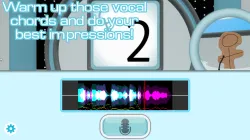
The sound design is really the star here. Voices are not just flavor; they are part of the gameplay loop. The game uses vocal cues, prompts, and timing-based delivery to create tension and momentum. That makes every session feel active, even when the visual presentation stays fairly restrained. Some games need flashy effects to keep your attention. Сhoicer Voicer gets more mileage out of audio than many bigger-budget titles do out of spectacle.
Why it stands out
There are a few things that make this one memorable. First, it respects your attention span. You can jump in and play without needing a long tutorial or a checklist of systems. Second, it has a kind of repeatable flow that makes retrying feel natural instead of annoying. Third, it plays well as a short-session game, which is a big plus if you want something free to sample or easy to install and revisit in spare moments.
The game also has a nice sense of unpredictability. Even when you understand the rules, the moment-to-moment outcomes can shift depending on how fast you read the situation. That keeps it from becoming stale too quickly. I’ve played plenty of games in this general lane that collapse once you figure them out. Сhoicer Voicer avoids that by making execution matter just as much as knowledge.
Gameplay depth without unnecessary clutter
What I like most is that the game doesn’t confuse simplicity with shallowness. A lot of compact games rely on one gimmick and hope that’s enough. Here, the mechanics are plain, but the challenge comes from the way they are arranged. As you continue, the game asks for sharper listening, faster responses, and more confidence in your choices. It’s not trying to be a giant sandbox. It’s trying to be focused, and that focus works.
There is also a strong sense of progression, even if the game never turns into a sprawling epic. Difficulty ramps in a way that makes improvement easy to notice. At first, you might second-guess yourself. Later, you start reading the audio and timing more naturally. That learning curve is one of the main reasons I’d recommend it to people who actually enjoy mastering a system rather than simply passing through it.
If you are the type who likes searching for cheats or mods, this is probably not the kind of title where those things define the experience. In fact, that’s part of its charm. The game’s appeal is rooted in learning the mechanics as intended. It feels best when played straight, with your own ears and reflexes doing the work. I’d say that makes it more satisfying, not less.
Presentation and style
The visuals support the concept without overcomplicating it. The game seems designed around clarity more than decoration, which is a smart call for something where audio and timing are central. That doesn’t mean it looks bland. It has enough style to feel curated, but not so much that it distracts from the core loop. For a game like this, that balance is important.
The interface is similarly disciplined. You get what you need, and not a lot of extra noise. That makes it easier to learn on the fly and keeps the focus on the actual challenge. Some players may want more bells and whistles, but I’d argue that the lean approach helps the game stay readable across platforms and devices, especially if you are planning to download it for quick sessions.
Who it is for
Сhoicer Voicer will appeal most to players who enjoy compact, skill-based games that make good use of sound. If you like games that reward attention, rhythm, and adaptation, this is a strong fit. It also works well for people who prefer something accessible over something bloated. You can install it, get the idea fast, and decide whether its style clicks with you within a surprisingly short time.
It may not be the best match if you want a huge campaign, deep narrative branching, or a giant roster of mechanics. This is a more specialized experience, and it knows it. But specialization can be a strength. When a game commits to one idea and executes it cleanly, the result is often more memorable than a broader but weaker design.
I also think this is the kind of title that can be appreciated on multiple platforms, assuming the version you are using is properly supported. If a native build is available, that is always the best route. If not, cloud or emulator-based access may become relevant depending on where the game is distributed. Either way, it is the sort of project that benefits from being easy to reach and quick to launch.
Final verdict
Сhoicer Voicer is a smart, tightly built game that gets a lot of value out of a simple premise. It does not waste your time, and it does not rely on gimmicks that collapse after the first hour. Instead, it uses voice-driven interaction and careful pacing to keep you engaged. That makes it feel fresh in a landscape crowded with overdesigned releases and forgettable clones.
From my perspective as an experienced gamer, the biggest compliment I can give it is this: it understands what kind of experience it wants to be, and it stays true to that identity. If you want something you can download, play, and actually remember afterward, this is worth a look. It may not shout for attention, but it earns it through design discipline and a style that feels genuinely its own.
For players looking for a free or low-friction entry point, or for those who enjoy games that can be installed quickly and replayed in short bursts, Сhoicer Voicer is easy to recommend. And if you are the sort of player who checks for cheats, mods, or unblocked access before diving in, you’ll likely appreciate how straightforward this game is to approach. It is focused, unusual, and more engaging than it first appears.
How to download Сhoicer Voicer
Availability & Launch: Сhoicer Voicer can usually be accessed through its official store page or publisher page, depending on the release. If a free version or demo is offered, it is typically listed there first. Look for the current build before you download, since launch availability can vary by region.
Platforms: Check the official listing for supported platforms such as PC, Mac, or Android. If a version is not native to your device, you may need cloud access or an emulator to play. Unsupported platforms are not usually available directly, so always confirm compatibility before you install.
Install: Open the official download page, get the installer or app package, then follow the on-screen prompts. On mobile, use the app store version if available. On PC or Mac, complete the install, launch the game, and grant any required permissions for audio input if the game uses voice features.
System Requirements: For PC or Mac, a basic modern processor, 4 GB RAM, and integrated graphics are often enough for a lightweight game like this. For Android, a recent OS version and enough free storage should be sufficient. Exact requirements depend on the release build.
Cheats / Mods: Cheats and mods are usually limited unless the developer supports them. If the community has created mods, they should be used only where allowed by the official rules or modding policy.
Unblocked Access: In restricted environments like school or work, unblocked access may not be guaranteed. Browser or cloud versions, if offered, are the most likely options, but network filters can still block them.
Pros
-
 Voice-driven gameplay gives the game a unique identity.
- Short sessions feel engaging and easy to pick up.
- Sound design and vocal cues are central to the experience and work well.
- The learning curve feels fair and rewarding.
- The game respects your time by avoiding unnecessary clutter.
- Difficulty progression encourages improvement and replayability.
Cons
-
 It is too specialized for players who want a large campaign or deep story.
- The experience depends heavily on audio, which may not suit every player.
- It may feel repetitive over long sessions compared to bigger games.










Leave a comment
Your comment is awaiting moderation. We save your draft here
0 Comments