
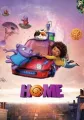



Home doesn't come up often in conversations about DreamWorks Animation's best work, and the numbers explain why: a 53% on Rotten Tomatoes and a 55 on Metacritic put it squarely in "mixed" territory, well behind the studio's actual prestige titles. And yet the film opened to more than $52 million domestically in March 2015, comfortably beat industry predictions, and ended its run with $386 million worldwide against a $135 million budget. That gap between what critics thought and what audiences actually did at the box office is the most interesting thing about Home, and it's worth walking through how a modest alien-invasion comedy pulled that off. The film rarely comes up in retrospectives of DreamWorks' animation output the way How to Train Your Dragon or Kung Fu Panda do, but its financial performance during a stretch when the studio badly needed a reliable hit makes it a more consequential release than its critical reputation would suggest on its own.
From a Kids' Book to a Delayed Release
Home began life as Adam Rex's 2007 novel The True Meaning of Smekday, and DreamWorks Animation optioned the rights the following year, long before the film had a director, a cast, or even a settled title. The option was renewed in 2011, and for most of its development the project carried the working title Happy Smekday!, a name that survived until Nintendo, not the studio's own instincts, apparently helped push the change — the film was formally retitled Home in June 2013, a far more generic and marketable name that stripped out the book's specific reference to the fictional holiday at the center of its plot.
Tom J. Astle and Matt Ember wrote the screenplay, and Tim Johnson, whose earlier animation credits included Antz and Over the Hedge, directed. Rex's original novel was considerably more pointed than the finished film ended up being, weaving in sharper commentary about displacement and cultural assimilation through Tip's perspective as a Black teenager navigating an alien occupation, material the adaptation softened substantially in favor of a broader, more conventional buddy-comedy structure aimed at a younger audience.
The finished film was originally slated for a Thanksgiving-adjacent release on November 26, 2014, competing directly in one of the year's most crowded animation windows. DreamWorks pulled it from that date and pushed it to March 27, 2015 instead, a decision that looks, in hindsight, like one of the smarter moves in the film's entire release strategy. Spring is a historically thinner month for family-film competition than the holiday season, and Home ended up benefiting from exactly the kind of open field that a November release would never have offered it. It's a scheduling lesson other studios have leaned on before and since: a mid-tier family film given genuine breathing room on the calendar tends to outperform the same film squeezed between two or three bigger, better-marketed competitors during the holidays.
Who Voices Who, and What Each Actor Brought
The cast leaned heavily on star power rather than dedicated voice-acting specialists, a common DreamWorks strategy but one that paid off unusually well here given how differently each performer approached their role:
- Jim Parsons as Oh, the accident-prone, socially awkward Boov outcast — reviewers consistently singled out Parsons' performance as the film's strongest element, carrying much of the comedy through vocal rhythm alone
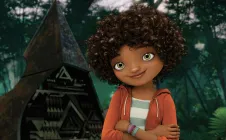
- Rihanna as Gratuity "Tip" Tucci, a thirteen-year-old girl searching for her mother after Earth's human population is forcibly relocated — her first lead voice role in an animated feature
- Jennifer Lopez as Lucy Tucci, Tip's mother — notably, Lopez's first collaboration with DreamWorks Animation since 1998's Antz, nearly two decades earlier
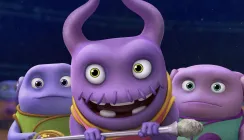
- Steve Martin as Captain Smek, the cowardly, self-serving leader of the Boov invasion fleet
- Matt Jones as Kyle, a rule-obsessed Boov officer, and Frank Welker voicing Pig, Tip's cat companion
That mix of a sitcom star, a pop superstar, a returning film veteran, and a comedy legend gave the marketing campaign multiple separate audiences to court at once, which turned out to matter more than any single performance once the film actually reached theaters. Casting a chart-topping musician in the lead role also meant the film's promotional cycle could piggyback on an entirely separate media ecosystem — radio, music press, awards-season buzz around Rihanna's own career — that a typical voice cast of dedicated animation performers simply wouldn't have generated on its own.
The Box Office Numbers That Surprised Everyone
Industry trackers had pegged Home's opening weekend somewhere between $30 and $35 million domestically before release. It cleared that estimate by nearly $20 million:
- $52.1 million domestic opening weekend, DreamWorks Animation's best debut since Madagascar 3: Europe's Most Wanted
- $102 million worldwide after just two weeks in release, per Variety's contemporaneous reporting
- $177.4 million total domestic gross by the end of its run
- $208.6 million in international box office, bringing the worldwide total to $386 million
- An A-minus CinemaScore from opening-weekend audiences, a rating that consistently correlates with strong word-of-mouth staying power
Fox's distribution chief at the time was blunt about the disconnect between reviews and turnout, telling reporters that "the critics missed the boat," and the audience data backs up why the studio felt confident dismissing the reviews rather than worrying about them.
Surveyed moviegoers skewed 60% female, 43% were over the age of 25, and the audience included a notably higher proportion of Black and Hispanic viewers than a typical wide-release animated film draws — a demographic spread analysts at the time attributed directly to the combined pull of Rihanna and Jennifer Lopez as headline voice talent rather than to the film's marketing alone.
Box-office analyst Paul Dergarabedian summed up the broader stakes for the studio bluntly at the time, noting that DreamWorks needed a hit and got one — a reminder that Home's importance to the company went well beyond any single weekend's ticket sales, landing during a period when the studio's slate had grown noticeably less reliable than it had been a few years earlier.
Awards, Rihanna's Companion Album, and What Critics Actually Objected To
Home's awards haul stayed modest and mostly technical rather than prestige-driven, which lines up with how critics described the film even in mixed reviews — "colorful, silly, and utterly benign," in one frequently echoed phrase, praised for craft and ambition aimed squarely at young children rather than penalized for reaching for more:
- Four Annie Award nominations, covering animated effects, character animation, production design, and effects simulations
- A Black Reel Award win for Rihanna's voice performance
- A MovieGuide Award for Best Movie for Families
- Three Kids' Choice Award nominations and two People's Choice Award nominations
The soundtrack arguably generated as much attention as the film's own trophy case. Rihanna released a full concept album titled Home on March 13, 2015, two weeks ahead of the movie itself, built around eight original songs including the lead single "Towards the Sun," which premiered on BBC Radio 1 before the film's marketing push had even fully ramped up. Jennifer Lopez contributed her own single, "Feel the Light," released later that February. Pairing a genuine pop album release with a theatrical rollout gave Home a second promotional engine most animated films never get, and it's a large part of why the film stayed culturally visible in the weeks surrounding its release even as reviews trickled in mixed. Critics who praised the film at all tended to single out the same handful of elements the awards nominations later confirmed — the production design and effects animation behind the Boov's bubble-like ships and color-shifting skin, rather than the screenplay or plot mechanics, which drew the bulk of the negative notices.
What Happened After: A Prequel Short, a Netflix Spin-off, and a Rights Handoff
The film's afterlife turned out to be more eventful than its theatrical run alone would suggest. A four-minute prequel short called Almost Home, following the Boov's earlier failed attempts to find a habitable planet before settling on Earth, played ahead of Mr. Peabody & Sherman and Rio 2 in theaters during 2014, effectively seeding the world before the main feature even arrived.
The bigger follow-up came in 2016, when Netflix launched Home: Adventures with Tip & Oh, an animated series built on the same premise but recast with Mark Whitten and Rachel Crow replacing Jim Parsons and Rihanna in the lead roles, with only Matt Jones returning as Kyle. The series ran for several seasons before Netflix quietly pulled it entirely from the platform worldwide in 2024, a casualty of shifting licensing agreements rather than any creative decision tied to the show itself.
On the corporate side, distribution rights to the original film moved from 20th Century Fox to Universal Pictures in 2018, following NBCUniversal's 2016 acquisition of DreamWorks Animation, a change that quietly shifted who actually controls the film's theatrical and home-release legacy going forward. Taken together, the short film, the multi-season streaming spin-off, and the eventual rights transfer all point to the same underlying reality: Home wasn't a one-off theatrical event so much as the anchor of a small, sustained media presence that Universal now oversees, even with the Netflix series itself no longer available anywhere.
Home split critics and audiences almost perfectly down the middle: a 53% Rotten Tomatoes score and mixed reviews on one side, a $386 million worldwide gross and an A-minus CinemaScore on the other. Built from Adam Rex's novel The True Meaning of Smekday and carried by a voice cast pairing Jim Parsons and Steve Martin with pop stars Rihanna and Jennifer Lopez, the film's smart March release date, Rihanna's companion album, and a diverse opening-weekend audience all helped it outperform expectations even as its Netflix spin-off eventually disappeared and its distribution rights changed hands entirely.








Leave a comment
Your comment is awaiting moderation. We save your draft here
0 Comments