







A Survival Sandbox That Refuses to Hold Your Hand
After decades of playing survival games that promise tension but quietly cushion every mistake, Project Zomboid feels like a rude awakening in the best possible way. This is not a power fantasy, and it does not pretend to be fair. It is a slow-burning apocalypse simulator that respects player intelligence and punishes impatience. As someone who has spent countless hours across survival sandboxes on different platforms, I can say Project Zomboid stands apart by committing fully to its grim vision.
The game drops you into Knox County, Kentucky, during a spreading undead outbreak. There is no cinematic opening or heroic objective. The premise is simple and unsettling: this is how you died. Everything that follows is about delaying that inevitability through planning, knowledge, and a deep understanding of the systems at work.
Gameplay Systems That Interlock Relentlessly
Project Zomboid is built on layered mechanics that constantly interact. Hunger, thirst, fatigue, panic, injury, and illness are not background meters but core elements shaping every decision. You do not just play; you manage a fragile human being in a collapsing world. Choosing whether to search a house or rest for the night can determine whether your story ends quietly or in chaos.
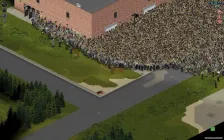
Combat exists, but it is never the focus. Direct confrontation is dangerous, clumsy, and often a last resort. Movement, positioning, and awareness matter more than reflexes. Even a single mistake, such as misjudging stamina or noise, can cascade into disaster. This approach makes every encounter tense without relying on scripted scares.
Skills, Professions, and Long-Term Planning
Character creation is deceptively deep. Professions, traits, and negative quirks define how your survivor handles stress and tasks. Over time, skills like carpentry, cooking, mechanics, and farming grow through use. Progress is slow, but that pace makes every improvement meaningful. Building a safehouse, securing food sources, and learning to live off the land becomes a personal journey rather than a checklist.
This depth encourages multiple play styles. Some players prefer stealth and isolation, others risk urban scavenging runs. With mods, the range expands even further, allowing custom scenarios, professions, and mechanical tweaks that drastically alter how the game feels.
World Design and Environmental Storytelling
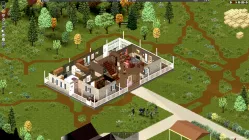
The isometric world of Project Zomboid may look simple at first glance, but it is remarkably detailed. Houses feel lived in, stores tell stories through scattered items, and towns reflect a community that vanished suddenly. There are no quest markers guiding you to safety. Exploration is driven by curiosity and necessity.
The map is vast and seamless, encouraging long-term survival rather than quick sessions. Vehicles, weather systems, and seasonal changes add layers of realism. Winter is especially unforgiving, turning early successes into logistical challenges. Food preservation, clothing, and heating become priorities, reminding you that survival is about adaptation, not domination.
Audio and Atmosphere
Sound design plays a crucial role. Footsteps, doors, alarms, and distant groans all convey information. Music is used sparingly, often fading in during moments of high stress. This restraint amplifies immersion and keeps tension grounded rather than theatrical.
Learning Curve and Player Commitment
Project Zomboid does not explain itself thoroughly, and that is intentional. New players may struggle during their first hours, especially those accustomed to forgiving survival games. However, this learning curve is part of the experience. Knowledge becomes your most valuable resource, far more important than gear.
The game rewards patience and preparation. Reading in-game books to boost skill gains, fortifying windows, and choosing when not to explore are all strategic decisions. Over time, players develop routines that feel earned rather than granted.
Multiplayer, Community, and Longevity
While solo play is deeply engaging, multiplayer introduces new dynamics. Cooperative survival allows shared responsibilities, while player-run servers can become social experiments. Trust, coordination, and communication matter just as much as resource management.
The community surrounding Project Zomboid is one of its strongest assets. Developers actively update the game, and the modding scene thrives. From quality-of-life adjustments to total conversions, mods ensure the experience remains fresh even after hundreds of hours. Some servers even experiment with custom rules, optional cheats, or roleplay-focused settings.
Technical Performance and Visual Style
Visually, Project Zomboid prioritizes clarity over spectacle. Animations have improved significantly over time, especially character movement and interactions. Performance is generally stable on modern systems, though large mod lists or busy servers can introduce slowdowns.
The interface is dense but functional, reflecting the complexity beneath the surface. Inventory management can feel overwhelming initially, but it mirrors the realism the game strives for.
Who Should Play Project Zomboid
This is a game for players who value systems-driven design and emergent storytelling. If you enjoy learning through failure and shaping your own narrative, Project Zomboid offers unparalleled depth. Those looking for fast-paced action or guided experiences may struggle, but for survival enthusiasts, it is one of the most rewarding titles available to download and install today.
How to download Project Zomboid
Project Zomboid is available to download through official digital storefronts and is not a free title, though sales appear regularly. Once purchased, you can install it directly on supported platforms without additional launchers.
In terms of platforms, the game officially supports PC, Mac, and Linux. It is not natively available on consoles or Android, but some players experiment with cloud services or emulation to play on unsupported systems, with mixed results.
To install, purchase the game, start the download through your chosen store, and follow the standard setup process. Updates are handled automatically. System requirements are modest: a modern dual-core CPU, 8 GB of RAM, and a dedicated or integrated GPU capable of running 2D isometric visuals. Mobile versions are not officially supported.
Mods are widely available through community hubs and are fully allowed in both solo and multiplayer, depending on server rules. Cheats exist but are typically restricted to sandbox settings or admin tools. Playing unblocked in schools or workplaces is unlikely due to network restrictions, unless using personal devices or approved cloud solutions.
Pros
-
 Large open world with meaningful exploration
 - Highly active mod community extending replay value
- Tense atmosphere without relying on scripted events
- Flexible play styles across solo and multiplayer
- Ongoing developer support with regular updates
- Deep survival mechanics that reward knowledge and patience
Cons
-
 Interface can feel overwhelming at first
 - Performance may dip with heavy mods or large servers
- Steep learning curve for new players









Leave a comment
Your comment is awaiting moderation. We save your draft here
0 Comments